
Best Camp Lighting: Lanterns, String Lights and Area Lights (Black Friday 2026)
A research-based guide to camp lanterns, string lights and overhead area lights, plus one budget headlamp. It uses manufacturer specs and cited independent reviews from GearJunkie and OutdoorGearLab.
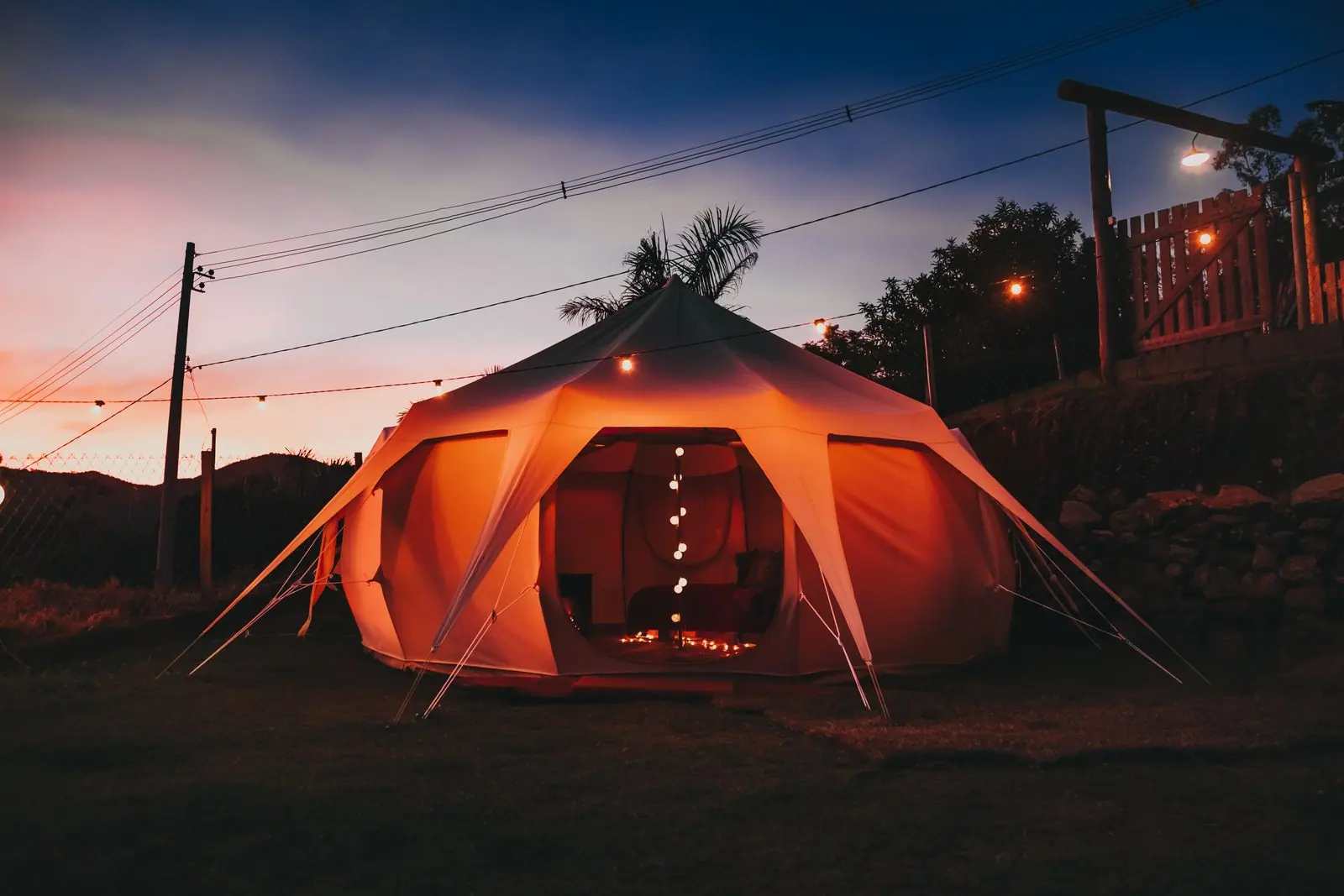
Photo: Matheus Bertelli / Pexels
Last updated: Oct 20, 2026
Disclosure: Ember & Amp is reader-supported. If you buy through links on this page, we may earn a commission at no extra cost to you. That never decides what we recommend. Read our full affiliate disclosure.
How we researched this: We have not tested these lights ourselves. This guide compares manufacturer-published specs and summarizes findings from independent reviewers who did test them (GearJunkie and OutdoorGearLab). Every spec and price below links to its source. All prices are as of Oct 20, 2026, taken from each brand's official US store. We don't list Amazon prices on this page. Prices change often around Black Friday, so check the live price before you buy.
The short version
| Pick | Best for | Max brightness | Rated runtime | Charging | Weight | Price as of Oct 20, 2026 |
|---|---|---|---|---|---|---|
| Devos Outdoor LightRanger 1200 | Overhead light for a whole campsite | 1,200 lumens | 3.75 hr high / up to 80 hr low | USB-C (20W) | 4 lb | $149.99 (Devos) |
| Kilos Gear Rover Camping Light X | Telescoping light for car camping, at a lower price | 600 lumens | 8–40 hr | USB-C | 1.3 lb | $109.95 sale price (Kilos Gear) |
| BioLite AlpenGlow 500 | Our main lantern pick for most campers | 500 lumens | 5 hr high / up to 200 hr low | Micro-USB (5V/2A) | 13.4 oz | $79.95 (BioLite) |
| Goal Zero Lighthouse 600 | Emergency-ready lantern with a hand crank | 600 lumens | 5 hr high / 320 hr low (one side lit) | USB (5V, up to 1A), hand crank, or Goal Zero solar panel | 1.1 lb | $79.95 (Goal Zero) |
| BioLite Luci Charge 360 | Cheaper is enough: self-charging budget lantern | 360 lumens | 5 hr high / 110 hr low | USB-C or built-in solar | 10.1 oz | $59.95 (BioLite) |
| BioLite Solar String Lights: 44' White | Soft, spread-out light around camp | 140 lumens | 8 hr high / 40 hr low | USB-C or built-in solar | 27.5 oz | $99.95 (BioLite) |
| Petzl Tikkina (headlamp) | The headlamp you still need | 300 lumens | 2.5 hr high / 100 hr low (AAA) | 3× AAA (included) | 3.2 oz (92 g) | $19.95 (Petzl) |
How to choose
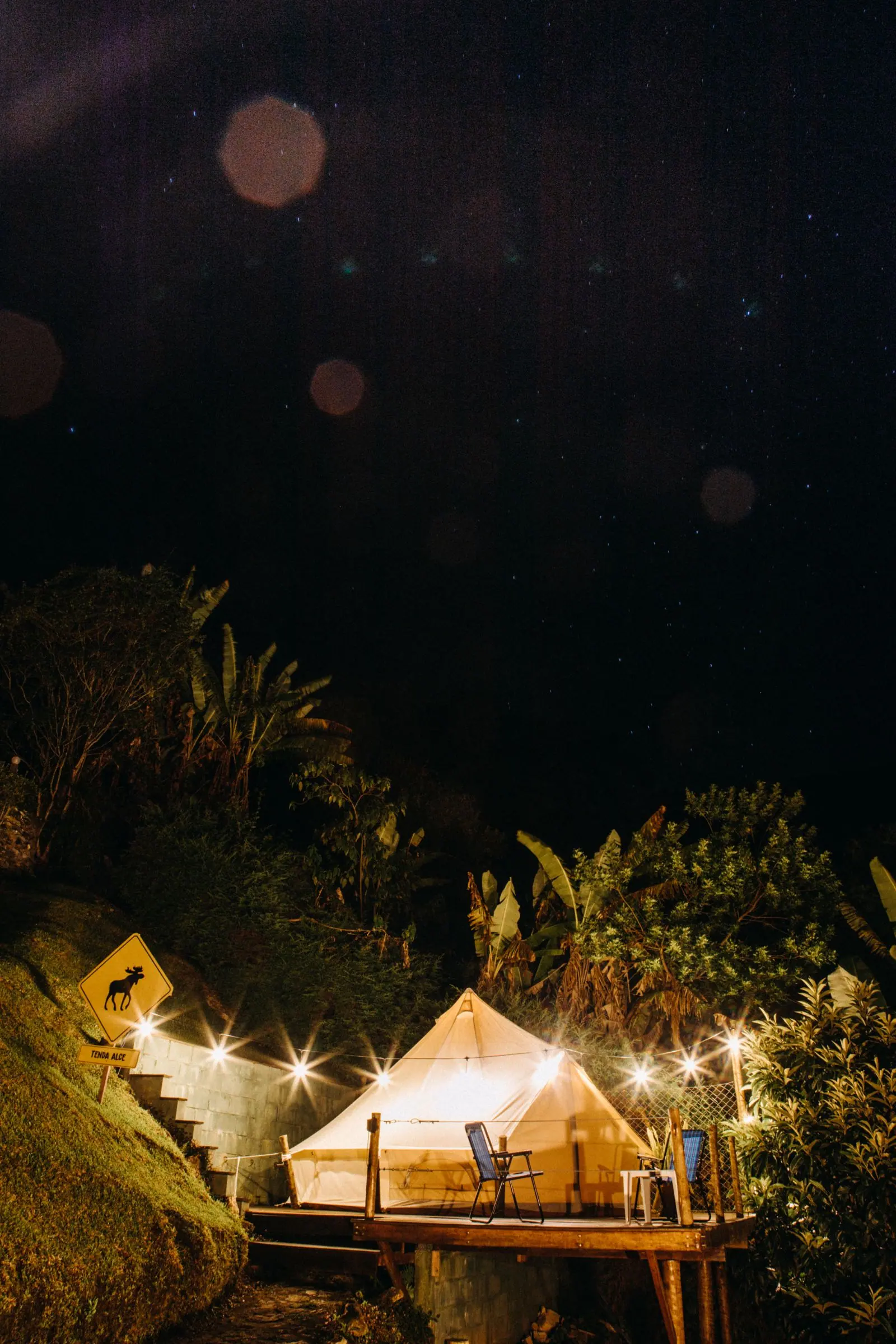
- Light the area you actually use. A tent or picnic table needs a lantern. A group site where people move around after dark is where an overhead area light like the LightRanger earns its price.
- Lumens aren't everything. Height and diffusion decide how comfortable the light is. Devos's pitch for the LightRanger is that raising the light overhead spreads it wider with less glare in your eyes (Devos).
- Runtime claims depend on the mode. The big "up to" numbers are for the lowest setting. Plan around the high-mode figure if you need bright light all evening.
- Cheaper is often enough. For most tent campers, one lantern plus a $20 headlamp covers everything. Spend more only if you're lighting a group site.
The picks
1. Overhead area light: Devos Outdoor LightRanger 1200
- Brightness: up to 1,200 lumens, white (5000K), dimmable; light zones of 4, 2 or 1 panel
- Coverage: up to 60 ft diameter (manufacturer claim)
- Height: telescoping tripod, 3 to 9 ft
- Runtime: 3.75 hr high / up to 80 hr low
- Charging: USB-C, 20W supported; 60% in 1 hr / 100% in 4 hr with a 20W charger. It has a USB-C output for topping up a phone. Devos lists charging support for "USB-C, solar panels and battery packs."
- Weight / weather: 4 lb; IP56
- Warranty: 2 years
- Price: $149.99 at Devos (price as of Oct 20, 2026)
- Source: Devos product page
- What testers said: GearJunkie covers it as a lower-cost alternative to its overhead-light pick, the Goal Zero Skylight. Their take: it puts out less light and stands lower, but it runs much longer on its own battery, so it makes more sense if you don't already own a power station (source). OutdoorGearLab's lantern review doesn't include it.
Who it's for: car campers, overlanders and groups who want one light over the whole site. Skip it if you mostly camp solo or in a tent; a lantern does that job for a fraction of the price.
2. Telescoping car-camping light: Kilos Gear Rover Camping Light X
- Brightness: up to 600 lumens from four light panels that tilt separately. Warm (2700K), warm white (4000K) and cool white (6000K) settings, plus RGB color modes.
- Height: built-in telescoping tripod, 0.9 to 2.97 ft. The magnetic base can attach to a vehicle.
- Runtime: 8–40 hr
- Battery: 10,400 mAh. It doubles as a power bank, and it charges by USB-C.
- Weight / weather: 1.3 lb (593 g); IPX5
- Warranty: 1 year
- Price: $109.95 at Kilos Gear. The site lists this as a sale price (price as of Oct 20, 2026).
- Source: Kilos Gear product page
- What testers said: No major outlet has reviewed it yet, including GearJunkie and OutdoorGearLab. A few smaller independent reviewers have tested it:
- One UK camping site received a free unit and earns commission on sales. It liked the tilting panels and the telescoping pole, and reported getting through several evenings on a long trip without recharging. In its test, the power bank only gave a phone a small emergency top-up, and it found the power bank's output is USB-A only (source).
- An Australian off-road reviewer called it their current pick among telescoping camp lights and reported about 26 hours on the orange setting. Their post includes Kilos affiliate links (source).
- A UK wild-camping blog was positive about its build and mounting options, but shared little test data (source).
Who it's for: car campers who want light from above the table and a magnetic mount for the vehicle, without paying for the LightRanger. The Devos LightRanger 1200 is still the brighter option (1,200 vs 600 lumens), with a taller reach (up to 9 ft vs about 3 ft) and a longer warranty (2 years vs 1). The Rover costs $40.04 less ($149.99 − $109.95). The reviews so far come from smaller sites, so treat it as promising rather than proven.
3. Main lantern pick: BioLite AlpenGlow 500
- Brightness: 500 lumens high, 5 lumens low; cool white, warm white, single-color and multicolor modes; CRI 90 (manufacturer claim)
- Runtime: 5 hr high / up to 200 hr low, plus 1 hr of reserve power
- Battery: 6,400 mAh (23.6 Wh) Li-ion; charges in 3 hr by 5V/2A micro-USB
- Charge out: 1× USB-A, 5V/2.4A
- Weight / weather: 13.4 oz; IPX4 (splash resistant)
- Warranty: 1 year
- Price: $79.95 at BioLite (price as of Oct 20, 2026)
- Source: BioLite product page
- What testers said:
- GearJunkie named it its best overall camping lantern, praising the natural-looking light and flexible modes. Their main gripes were that it still charges by micro-USB rather than USB-C, and that the shake-to-change control sometimes misses (source).
- In OutdoorGearLab's battery test it ran 5.1 hours, one of the longest results in their lineup. They noted its warm and cool white options, candle-flicker and color modes, and splash resistance. Their overall top lantern, though, was the Goal Zero Lighthouse 600 (below) (source).
Who it's for: most campers who want one lantern for the table, tent and power outages. It's our main lantern recommendation because GearJunkie rated it best overall and OutdoorGearLab measured one of the longest runtimes in its test.
4. Emergency-ready lantern: Goal Zero Lighthouse 600
- Brightness: up to 600 lumens, warm white (3,500K); lights 360° or just one side
- Runtime: one side lit, 320 hr low / 5 hr high; both sides lit, 180 hr low / 2.5 hr high
- Battery: 18.98 Wh (5,200 mAh) Li-ion NMC
- Charging: about 6 hr from a USB source (input 5V, up to 1A); about 6 hr from a Goal Zero Nomad 10 solar panel; hand crank gives 10 minutes of low light per minute of cranking
- Charge out: USB, 5V up to 1.5A (7.5W max)
- Weight: 1.1 lb (498 g)
- Warranty: 2 years
- Price: $79.95 at Goal Zero (price as of Oct 20, 2026)
- Source: Goal Zero product page
- What testers said:
- OutdoorGearLab named it their best overall lantern. They found it bright and consistent and valued the hand crank for outages. Their downsides: the outer cover felt brittle, the red emergency lights are weak, and it measured 3.2 hours on its highest setting (source).
- GearJunkie lists it as a runner-up. They found the crank roughly matched Goal Zero's claim, but they disliked the glare from its clear globe, its tip-prone two-leg stand, and the permanently attached USB cord (source).
Who it's for: anyone who wants a camp lantern that doubles as power-outage backup, since the crank means it's never fully dead. It costs the same as the AlpenGlow and has a longer warranty (2 years vs 1). The AlpenGlow has softer light and more modes.
5. Cheaper is enough: BioLite Luci Charge 360
- Brightness: up to 360 lumens, warm white; low, medium, high and flashing modes
- Runtime: 110 hr low / 5 hr high
- Battery: 4,000 mAh (14.8 Wh) Li-ion
- Charging: USB-C in 5–6 hr, or 28 hr via the built-in solar panel
- Charge out: 1× USB-C, 1× USB-A
- Weight / weather: 10.1 oz; IP67
- Warranty: 1 year
- Price: $59.95 at BioLite (price as of Oct 20, 2026)
- Source: BioLite product page
- What testers said:
- GearJunkie picked it as its best solar-powered lantern and liked how packable it is.
- On durability, they said Luci lights in general aren't especially tough. Of the more than a dozen Luci lights of various models they've bought over the years, roughly half failed after a year or two of heavy use. Some only tore, and those kept working even without holding air (source).
- OutdoorGearLab's lantern review doesn't include it.
Who it's for: tent campers on a budget. It's $20 less than the AlpenGlow ($79.95 − $59.95), lighter, more water resistant, and charges by USB-C or sunlight. You give up 140 lumens and the color modes. Solar charging takes a full day or more (BioLite's figure is 28 hours), so top it up by USB-C before a trip. Be realistic about lifespan: GearJunkie's long-term experience suggests heavy users may get a year or two, and BioLite's warranty is 1 year. For occasional campers it's still a good value. If you camp often, the AlpenGlow is the safer buy.
6. String lights: BioLite Solar String Lights: 44' White
- Length: 44 ft nylon-braided cord, 20 shatterproof bulbs (40 warm white LEDs)
- Brightness: up to 140 lumens; low, medium and high modes
- Runtime: 40 hr low / 8 hr high
- Battery: 4,000 mAh (14.8 Wh) Li-ion in a detachable unit
- Charging: USB-C in 3–5 hr, or built-in solar panel
- Charge out: 1× USB-C, 1× USB-A
- Weight / weather: 27.5 oz; IPX4
- Warranty: 1 year
- Price: $99.95 at BioLite (price as of Oct 20, 2026)
- Source: BioLite product page
- What testers said: GearJunkie named this warm-white, 44-foot BioLite string light its best string lights. They liked the wide, soft coverage and the way the string stores in the base, but found the small solar panel slow to charge from empty (source). OutdoorGearLab's lantern review doesn't include string lights.
Who it's for: groups and longer stays, where spread-out ambient light beats one bright point. At 140 lumens spread over 44 feet, treat these as mood and pathway lighting, not task lighting.
7. You still need a headlamp: Petzl Tikkina
- Brightness: 300 lumens (ANSI/PLATO FL 1); wide beam
- Runtime (with the included AAA batteries): 2.5 hr at 300 lumens (Max Power) / 100 hr at 7 lumens (Max Burn Time)
- Power: three AAA batteries (included), or Petzl's CORE rechargeable battery (sold separately); works with alkaline, lithium or Ni-MH
- Weight / weather: 3.2 oz (92 g); IPX4
- Warranty: 5 years
- Price: $19.95 at Petzl (price as of Oct 20, 2026)
- Source: Petzl product page
- What testers said:
Why it's here: a lantern can't follow you to the restroom or into the car. For camp chores, a basic $20 headlamp is enough.
Charging from your power station or solar panel
These are the pairings we could verify from official specs. "Full speed" means the port meets or exceeds the light's published charging input: 20W USB-C for the LightRanger 1200, 5V/2A for the AlpenGlow 500, and 5V/1A for the Lighthouse 600. BioLite doesn't publish input wattage for the Luci Charge 360 or the string lights, so we can't say whether they'd charge at full speed.
- EcoFlow RIVER 3 Plus (from our power station guide): its USB-C port is rated up to 20V⎓5A, 100W max (EcoFlow). That's more than the LightRanger 1200's 20W USB-C charging, so it can charge it at full speed.
- Anker SOLIX C1000 Gen 2: USB-A 5V⎓2.4A (12W max); USB-A and USB-C1 share 20W total; USB-C2 up to 140W (Anker). Full speed: the LightRanger 1200 on USB-C2; the AlpenGlow 500 and Lighthouse 600 on USB-A.
- Jackery Explorer 1000 v2: one USB-C at 30W max, one USB-C at 100W max, and USB-A at 18W max (5–6V⎓3A) (Jackery). Full speed: the LightRanger 1200 on either USB-C port; the AlpenGlow 500 and Lighthouse 600 on USB-A.
- Jackery Explorer 2000 v2: the same USB layout, with one 30W and one 100W USB-C plus an 18W USB-A (Jackery). Full speed: the same lights as the 1000 v2.
- Jackery SolarSaga 200W panel (from our solar panel guide): it has built-in USB-A (5V⎓2.4A) and USB-C (5V⎓3A) ports (Jackery). The USB-A port matches the AlpenGlow 500's 5V/2A input and exceeds the Lighthouse 600's 5V/1A. The USB-C port tops out at 15W (5V × 3A), under the LightRanger's 20W, so expect slower charging than Devos's 4-hour figure.
- Kilos Gear Rover Camping Light X: Kilos lists USB-C charging but doesn't publish the input wattage on its product page, so we can't say which ports charge it at full speed.
- The Luci lights and string lights charge themselves by solar, so they don't need a station at all on sunny trips.
Price per lumen
This is price divided by maximum lumens, using the prices above (Oct 20, 2026).
- Petzl Tikkina: $19.95 ÷ 300 = $0.067 per lumen
- LightRanger 1200: $149.99 ÷ 1,200 = $0.125 per lumen
- Lighthouse 600: $79.95 ÷ 600 = $0.133 per lumen
- AlpenGlow 500: $79.95 ÷ 500 = $0.160 per lumen
- Luci Charge 360: $59.95 ÷ 360 = $0.167 per lumen
- Rover Camping Light X: $109.95 ÷ 600 = $0.183 per lumen
- Solar String Lights 44' White: $99.95 ÷ 140 = $0.714 per lumen
The Tikkina's figure isn't a direct comparison: it's a focused headlamp beam rather than a 360° lantern, and it runs on AAA batteries you'll keep buying unless you add Petzl's rechargeable battery. Among the lanterns, the overhead light costs the most up front but the least per lumen. That only matters if you need that much light. The string lights cost the most per lumen because you're paying for coverage and ambiance, not brightness.
Black Friday tips
- Black Friday is Nov 27, 2026, and brand sales often start earlier. We'll refresh these prices around Nov 17–20 and again on Black Friday.
- Lighting is an easy add-on to a power-station purchase. Check whether a brand bundles lights with its stations before buying separately.
Bottom line
For most campers, the BioLite AlpenGlow 500 plus a Petzl Tikkina headlamp is the setup we'd recommend, at $99.90 together ($79.95 + $19.95). If you want backup for power outages, the Goal Zero Lighthouse 600 costs the same as the AlpenGlow and adds a hand crank. On a tighter budget, the Luci Charge 360 saves $20; just know that GearJunkie reports Luci lights can wear out with heavy use, and its warranty is 1 year. Add the Solar String Lights for group-site ambiance. Buy the Devos LightRanger 1200 if you regularly light a whole campsite. The Kilos Gear Rover Camping Light X is a lower-priced telescoping option for car campers, though it's dimmer and hasn't been reviewed by a major outlet yet.
Specs are manufacturer-published and not independently tested by Ember & Amp. Prices as of Oct 20, 2026.